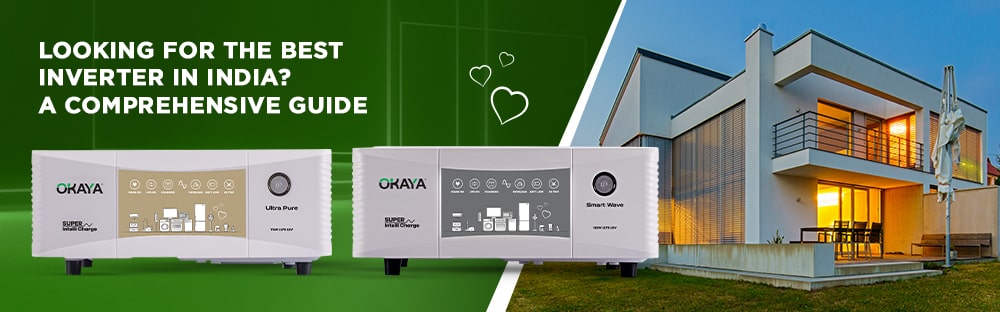
In today's fast-paced world, uninterrupted power supply is essential, making an inverter a crucial component in every household. But with so many options available, how do you choose the best one? This buying checklist walks through the factors that actually matter — power requirement, battery type, efficiency, protection features, and warranty — before you commit to an inverter for home in India.
The type of inverter you choose affects power quality and appliance safety. Pure/true sine wave inverters are generally recommended because their output closely mirrors grid power, which matters for sensitive electronics like computers, LED TVs, and motor-based appliances such as refrigerators. Modified sine wave (also called quasi-sine wave) inverters produce a rougher, stepped waveform — lower cost but with a higher risk of stressing motor-based and sensitive appliances over time. Okaya's current Home UPS and Hi-Capacity UPS ranges run on Advanced True Sine Wave (ATSW) technology rather than offering a modified sine wave tier. For a full breakdown, see our guide on pure sine wave inverters.
Power Requirement: The first step is to determine your power needs — calculate the total wattage of the devices you want to run during an outage. This helps you choose an inverter with the appropriate VA capacity. See our step-by-step guide on how to choose the right inverter VA for your home or browse the Home UPS product range by capacity.
Battery Type: Inverters work in tandem with batteries, so choosing the right type matters. Tubular batteries are often recommended for their durability and long life. If you're planning a long-lasting battery setup, see our guides on choosing the right inverter battery capacity and how to buy the best tubular inverter battery.
Inverter Efficiency: Efficiency affects both appliance performance and electricity usage. Pure sine wave inverters with an efficient core design lose less power during conversion than lower-quality alternatives.
Protection Features: Look for overload protection, short-circuit protection, and battery protection features — these reduce the risk of damage to both the inverter and connected appliances over time.
Brand and Warranty: Choose a brand with a track record of after-sales service and clear warranty terms, since long-term support matters as much as the inverter's specifications at the time of purchase.
Okaya's inverter for home range (700–2000 VA, ATSW950 through ATSW2550) uses Advanced True Sine Wave technology and covers different household loads, from basic lights and fans to refrigerators and other sensitive or motor-based appliances, depending on the selected VA model. For higher-capacity setups, Okaya's Hi-Capacity UPS range (Power MAX Series, 2500–6100 VA) is built for heavier loads across homes, offices, and shops.
Super Intelli Charge for Battery Performance: An advanced charging profile with Boost-to-Float charging, designed to support faster, efficient charging and battery health.
True Sine Wave Output for Appliance Safety: ATSW technology delivers a smooth, grid-like current, supporting appliance safety and normal lifespan when the inverter is correctly sized for the load.
EI Core Design for Efficiency and Longevity: The EI core helps minimize heat generation and power loss, supporting energy-efficient operation and the operational lifespan of the UPS.
Load Handling: Okaya's Home UPS and Hi-Capacity UPS ranges are engineered to handle a wide range of home and commercial loads.
Once you've worked through power requirement, battery type, efficiency, and protection features, the final step is matching a specific model to your home. Our guide on which inverter is best for home use in India covers the decision criteria and Okaya's range in more detail.
Browse the Home UPS range or the Hi-Capacity UPS range on shop.okaya.in.
Choosing the right inverter for home use comes down to working through a clear checklist — power requirement, battery type, efficiency, protection features, and warranty — rather than picking on price or brand name alone. Okaya's ATSW-based Home UPS and Hi-Capacity UPS ranges are built around these fundamentals, covering both everyday household needs and higher-capacity setups.
What should I consider before buying an inverter for my home?
Work through five factors in order: your total power requirement (VA sizing), the battery type you'll pair it with, the inverter's efficiency and waveform quality, its protection features, and the brand's warranty and after-sales support.
What should I look for in terms of warranty and after-sales service when buying an inverter?
Check the warranty period on both the inverter and battery separately, confirm whether the brand has a local service network for repairs, and look for documented protection features such as overload, short-circuit and battery protection, which help protect the inverter and connected equipment during abnormal operating conditions.
Is a tubular battery necessary with my inverter?
Not strictly necessary, but tubular batteries are commonly recommended for home inverters due to their durability and longer service life compared to some other battery types. See our dedicated guide on choosing a tubular inverter battery for more detail.
Should I buy a pure sine wave or modified sine wave inverter?
Pure sine wave is the safer choice for a home running motor-based appliances and sensitive electronics, since its output closely matches grid power. Modified sine wave costs less but carries a higher risk of appliance stress over time.
Does Okaya offer both Home UPS and Hi-Capacity inverter options?
Yes. Okaya's Home UPS range (700–2000 VA) covers typical household needs, while the Hi-Capacity UPS range (Power MAX Series, 2500–6100 VA) is built for higher-capacity homes, offices, and shops.
 OKAYA POWER PVT. LTD.
ENERGIS D-7, 3rd & 4th Floor, Rohtak Rd,
Udyog Nagar, Mangolpuri,
New Delhi - 110041, INDIA
© 2026 All Rights Reserved to Okaya Power Private Limited